How to Choose the Right Fabric for Diwali Ethnic
Diwali dressing is not only about choosing a beautiful colour or festive embroidery. The fabric underneath it can decide whether your outfit feels comfortable all evening or becomes something you want to change after an hour.
This matters even more in India because Diwali weather is different from one city to another. A November evening in Delhi can feel cool, while Mumbai, Kolkata or Chennai may still feel warm and humid. Your venue matters too. A family puja at home, an outdoor Diwali party and a formal dinner do not require the same fabric.
So, how do you choose the right fabric for your Diwali outfit?
The simple answer: choose the fabric according to the weather, occasion, amount of movement, desired look and how long you expect to wear the outfit.
Which fabric is best for Diwali ethnic wear?
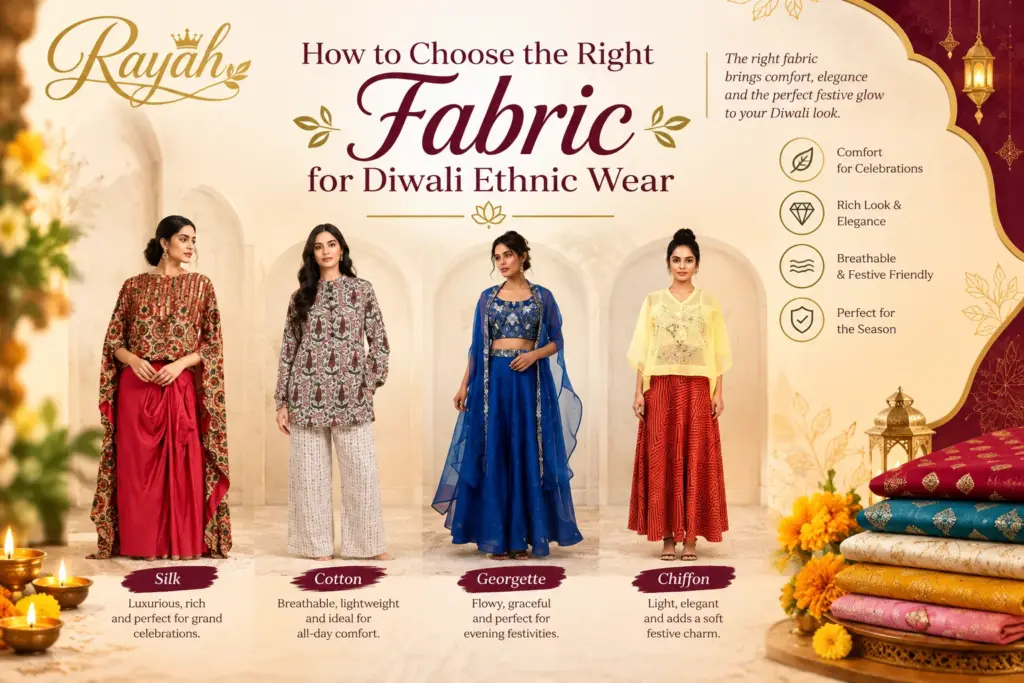
There is no single fabric that works for every Diwali celebration. Silk and brocade offer a rich traditional appearance, while chanderi and cotton-silk can give you festive elegance without excessive weight. Georgette works well when you want movement and a softer fall, while organza is useful when you want a crisp, structured look.
The best choice depends on where and when you are wearing it.
| Fabric | Best for | Feel | Suitable for |
|---|---|---|---|
| Silk | Traditional festive looks | Rich, smooth, structured | Puja, dinner, formal celebrations |
| Cotton-silk | Comfort with festive appeal | Soft, light to medium | Family gatherings, long celebrations |
| Chanderi | Elegant daytime dressing | Light, airy, slightly crisp | Puja, family functions |
| Georgette | Flowing silhouettes | Light and fluid | Parties, dinners, dancing |
| Organza | Structured festive outfits | Crisp and lightweight | Anarkalis, dupattas, modern looks |
| Brocade | Traditional grandeur | Rich and heavier | Evening celebrations, formal occasions |
| Velvet | Cooler-weather dressing | Plush and warm | Cold-weather evening events |
1. Start with the Diwali weather
Before looking at embroidery or colour, think about your city’s weather.
If you live in a warmer or humid part of India, a heavy fabric can quickly become uncomfortable. Lightweight cotton-silk, chanderi or a suitable flowing fabric can be easier to wear for several hours.
In cooler parts of North India, heavier silk, brocade or velvet can make more sense for an evening celebration.
This is one point often missed in online fabric guides: the same Diwali outfit can feel completely different depending on the city and venue.
For example, a heavily layered outfit may work beautifully for an indoor Delhi celebration on a cool evening but feel excessive at a warm outdoor gathering in another city.
2. Match the fabric to the occasion
Think about what you will actually be doing.
For a Diwali puja, you may be sitting, standing, moving around the house and spending time with family. A comfortable fabric with a neat fall is usually more practical than an extremely heavy outfit.
For an evening party, you can experiment with more movement and shine. Georgette, organza, silk and embellished fabrics can create a more dressed-up appearance.
For a formal family celebration, silk, brocade or a refined cotton-silk blend can give you the traditional richness associated with Diwali.
If you are looking for a complete Diwali ethnic dress, consider the whole outfit rather than just the fabric. The lining, sleeves, neckline, dupatta and amount of embroidery all change how the fabric feels.
3. Think about how long you will wear it
This is perhaps the most practical test.
Ask yourself: “Will I be wearing this for one hour or six hours?”
A fabric that feels fine for a short dinner can become uncomfortable during a long family celebration.
Heavy embroidery also adds weight. If the base fabric is already heavy, additional zari, sequins or dense embroidery can make the outfit tiring to wear.
For a long evening, a lighter base with carefully placed embellishment can be a better balance.
The goal is not to avoid rich fabrics. It is to avoid making the entire outfit heavy when only one or two areas need to create the festive effect.
4. Choose silk when you want a traditional finish
Silk remains a natural choice for festive Indian dressing because of its sheen and structured appearance.
It works particularly well when you want your outfit to look traditional and polished without depending entirely on heavy decoration.
However, silk comes in many varieties and weights. Do not assume that every silk garment will feel the same.
For a warm evening, consider the actual weight and construction of the garment rather than choosing silk simply because it sounds festive.
Silk can be especially effective for:
- Festive kurta sets
- Sarees
- Anarkalis
- Formal ethnic suits
- Traditional evening celebrations
5. Choose chanderi or cotton-silk for a lighter festive look
If comfort is high on your list but you still want a festive finish, chanderi and cotton-silk are worth considering.
They can provide the elegance associated with occasion wear without the feeling of wearing a very heavy garment.
These fabrics can work particularly well for home puja, family gatherings and celebrations where you expect to spend several hours sitting, eating and moving around.
The important thing is to check the complete garment. A lightweight fabric can still become uncomfortable if it has a thick synthetic lining or excessive embellishment.
6. Choose georgette when movement matters
Georgette is useful when you want a softer, flowing silhouette.
It can work nicely for anarkalis, shararas, dupattas and other outfits where movement is part of the look.
It is also a practical option when you do not want your outfit to feel stiff.
One thing to check is the lining. Lightweight and semi-sheer fabrics often need appropriate lining, and a heavy or poorly chosen lining can completely change how comfortable the finished garment feels.
7. Pick organza for structure, not softness
Organza has a crisp character, which makes it useful when you want volume or a clean silhouette.
It can look particularly attractive in dupattas, overlays and structured festive outfits.
The trade-off is that crisp fabrics can show creases more easily. If you are travelling for Diwali or carrying the outfit in a suitcase, remember to consider how much pressing and care it will need before wearing.
8. Don’t forget the lining
The fabric you can see is only half the story.
The lining touches your body and can affect breathability, movement and overall comfort. A beautiful outer fabric may still feel uncomfortable if the inner construction is too warm, rough or restrictive.
Before buying, check:
- Is the lining soft?
- Does it allow comfortable movement?
- Is the neckline comfortable?
- Are the seams irritating?
- Can you sit comfortably?
- Does the garment feel too warm after a few minutes?
If you are shopping online, look carefully at the product details and construction photos instead of judging the outfit only from the front image.
9. Use fabric weight to balance embroidery
A useful rule for Diwali dressing is to balance fabric weight + embroidery weight.
Heavy fabric with heavy embroidery can create a grand appearance, but it may not be practical for a long celebration.
A medium-weight fabric with embroidery concentrated around the neckline, sleeves, border or dupatta can often create a festive look without making the entire outfit cumbersome.
This also gives you more opportunities to wear the outfit again after Diwali.
Quick fabric decision guide
| If your priority is… | Consider |
|---|---|
| Maximum comfort | Cotton-silk or lightweight cotton |
| Traditional richness | Silk or brocade |
| A light festive feel | Chanderi |
| Flowing movement | Georgette |
| Crisp, modern styling | Organza |
| Cold evening wear | Velvet or heavier silk |
| Long hours of wear | Lightweight or medium-weight fabrics |
| Heavy embroidery | A stable fabric with good structure |
A simple test before buying
Before finalising your outfit, imagine the entire evening.
Will you be walking around? Sitting on the floor for puja? Taking photos? Eating dinner? Meeting relatives? Dancing? Travelling between venues?
If the answer is yes to several of these, comfort should be part of your fabric decision.
Also check the fabric in natural light if possible. Some materials look completely different under shop lighting, indoor lighting and camera flash.
A good festive outfit should look beautiful in photographs, but it should also feel good when you are actually wearing it.
Final thoughts
Choosing fabric for Diwali is really about finding the right balance between comfort, occasion and festive appearance.
Silk and brocade can create a traditional statement. Chanderi and cotton-silk can offer a lighter approach. Georgette brings movement, while organza adds structure. The right choice depends on your city, venue, weather, outfit design and how long you plan to wear it.
At Rayah, the idea should always be simple: festive clothing should not only look beautiful when you first put it on. It should continue to feel right as the evening goes on.
Choose the fabric first with your real Diwali plans in mind, and the rest of the outfit becomes much easier to get right.
Is silk suitable for Diwali?
Yes. Silk is a popular choice for traditional festive dressing because of its rich appearance and natural sheen. Choose the weight according to the weather and venue.
Is georgette good for Diwali outfits?
Georgette can work well for flowing festive outfits such as anarkalis, shararas and dupattas. Check the lining carefully, particularly when the fabric is lightweight or semi-sheer.
What fabric should I choose for a warm Diwali evening?
For a warm or humid evening, consider lighter fabrics such as cotton-silk or chanderi. Avoid choosing a very heavy fabric simply because the event is festive.
Is velvet suitable for Diwali?
Velvet can be suitable for cooler Diwali evenings, particularly in colder parts of India. Because it is warm and heavier, it may not be comfortable for a warm outdoor celebration.
How can I make a heavy festive outfit more comfortable?
Look for breathable or medium-weight base fabric, lighter lining and embroidery concentrated in selected areas rather than covering the entire garment.
Should I choose fabric before the design?
Ideally, consider both together. The same design can look and feel completely different in silk, georgette, chanderi or cotton-silk because each fabric has a different fall, weight and structure.
What should I check when buying ethnic wear online?
Check the fabric composition, lining, garment measurements, embroidery details and care instructions. Product photos alone may not tell you how heavy or comfortable the outfit will feel.