What Are the Latest Trends in Designer Indian Ethnic Wear
- September 28, 2026
- admin
- 12:01 pm
Indian ethnic fashion is changing in an interesting way. Women still want the richness of traditional clothing, but they also want outfits that feel easier to wear, more comfortable and relevant beyond one occasion.
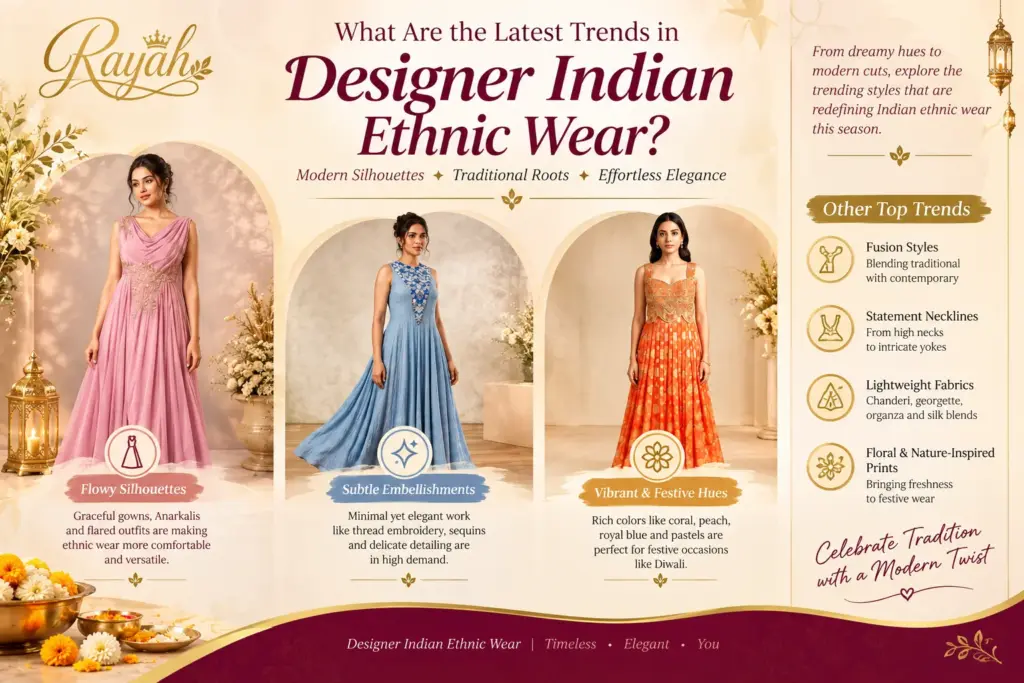
Current fashion coverage for 2026 shows a clear move toward lighter fabrics, refined embellishment, contemporary silhouettes, coordinated sets and heritage-inspired details. Instead of choosing between traditional and modern dressing, shoppers are increasingly looking for both in the same outfit.
So, what should you look for when updating your ethnic wardrobe this year?
Quick Answer
The latest trends in designer Indian ethnic wear are centred around contemporary silhouettes, lighter festive fabrics, statement colours, refined embroidery, versatile co-ord styles and traditional craftsmanship presented in a more modern way.
For Indian weddings and celebrations, the focus is shifting from simply wearing something heavily decorated to choosing an outfit with a clear design identity. A well-cut lehenga, an elegant kurta set or a saree with a modern drape can make a stronger impression than excessive embellishment.
7 Trends Shaping Indian Ethnic Fashion in 2026
| Trend | What it looks like | Best suited for |
|---|---|---|
| Modern silhouettes | Cleaner cuts, structured fits and updated drapes | Weddings, parties |
| Lightweight festive fabrics | Chanderi, organza, tissue and lighter silk blends | Puja, daytime functions |
| Refined embellishment | Detailed work used as a focal point rather than everywhere | Weddings, receptions |
| Coordinated sets | Matching or carefully paired kurta and bottom sets | Festive lunches, family events |
| Heritage-inspired details | Traditional motifs, craft techniques and Indian textiles | Festivals, weddings |
| Rich but controlled colours | Jewel tones balanced with softer shades | Evening celebrations |
| Versatile ethnic pieces | Outfits that can be styled differently for multiple occasions | Regular festive wardrobes |
1. Modern Silhouettes Are Changing Traditional Dressing
Traditional Indian outfits are not disappearing. Their shapes are simply becoming more contemporary.
Straight-cut kurtas, wider trousers, updated lehenga proportions and sarees with modern blouse designs are making ethnic clothing easier to style. The idea is to retain the character of Indian fashion without making every outfit look overly formal.
This is especially useful for women attending several functions during a wedding. Instead of buying an outfit that works only for one event, a versatile silhouette can be restyled with different jewellery, footwear or dupattas.
2. Lightweight Luxury Is Becoming More Practical
Heavy clothing has always had its place in Indian wedding fashion, but comfort is becoming an important part of the buying decision.
Current 2026 trend reports repeatedly point toward lighter fabrics and less overwhelming construction. Chanderi, cotton-silk, organza, tissue and lighter silk blends are appearing in festive wardrobes because they can provide a dressed-up appearance without unnecessary weight.
For India’s climate, this makes sense. An outfit should look beautiful in photographs, but it should also allow you to sit through a ceremony, move around at a family gathering and remain comfortable during a long evening.
3. Embellishment Is Becoming More Intentional
Another noticeable change is the way embroidery and embellishment are being used.
Instead of covering every surface with heavy decoration, designers are increasingly using embroidery, zari, sequins or handcrafted details to create a focal point.
For example, detailed work around a neckline, border or blouse can give an outfit a luxurious finish while allowing the rest of the design to remain clean.
This also makes accessorising easier. When the outfit already has a strong design element, you can keep jewellery relatively simple.
4. Co-Ord Sets Are Moving Beyond Casual Dressing
Co-ordinated ethnic sets have become one of the most visible changes in women’s Indian fashion. Matching or carefully paired tops and bottoms give the convenience of a complete outfit while still allowing room for styling.
Current trend coverage highlights embroidered and festive co-ord sets as an important part of the 2026 wardrobe.
For Indian celebrations, they can work particularly well for mehendi functions, festive lunches, family gatherings and smaller evening events.
The bigger change is that ethnic dressing no longer has to mean a conventional kurta-dupatta combination every time.
5. Heritage Details Are Getting a Modern Setting
Indian fashion has an enormous design vocabulary. Handloom-inspired textures, traditional motifs, regional influences and familiar Indian craft details continue to attract attention.
Recent fashion coverage is also highlighting the importance of preserving the identity of regional textiles and crafts while giving them a contemporary design language.
This is an important trend because modern ethnic fashion does not have to copy Western clothing to look current. A traditional detail can feel completely fresh when it is placed on a contemporary silhouette.
6. Colour Is Becoming More Occasion-Specific
Colour trends are also becoming more thoughtful.
Soft pastels and muted shades work beautifully for daytime celebrations, while deeper shades such as wine, emerald, plum and sapphire can create more drama for evening events. Current festive-wear reporting also points toward a mix of softer tones and vibrant colour accents rather than one fixed palette.
Rather than asking, “Which colour is trending?”, a better question is: “Where am I wearing this?”
A daytime puja, wedding reception and cocktail evening can each call for a completely different colour mood.
7. One Outfit, More Than One Occasion
Perhaps the most useful shift is versatility.
Modern ethnic shoppers are becoming more selective about whether an outfit can be worn again. A statement lehenga may be styled differently with another blouse or dupatta. A kurta set can work for a festive lunch and later for a family celebration. A saree can take on a different appearance simply through the blouse, jewellery and drape.
This makes designer ethnic clothing feel less like a one-time purchase and more like part of a personal wardrobe.
How to Choose the Right Ethnic Trend for Your Occasion
Before following a trend, consider the event.
For weddings: Choose a statement lehenga, detailed kurta set or elegant saree with distinctive craftsmanship.
For festive pujas: Lighter fabrics, graceful silhouettes and refined colours are practical choices.
For receptions: Richer colours, structured silhouettes and controlled embellishment can create a more polished appearance.
For family celebrations: Versatile kurta and palazzo sets can offer a balance between comfort and dressing up.
For evening parties: Look for stronger colours, subtle shimmer and silhouettes that allow easy movement.
Rayah‘s Indian ethnic collection follows this balance between traditional design and contemporary dressing. The collection includes designer lehengas, contemporary kurta and palazzo sets, and sarees with modern styling, making it suitable for different types of Indian celebrations.
Where to Find Designer Ethnic Wear Online in India
When shopping online, look beyond photographs. Check the fabric, measurements, embellishment details, lining, available sizing and the type of occasion the outfit is designed for.
Rayah offers a limited-run collection designed in-house, with pieces created for weddings, festive celebrations, parties and other special occasions. The collection currently includes nine designs across its Indian Ethnic Wears category.
If you are looking to buy Indian ethnic wear online India, choosing a designer collection with distinct silhouettes can help you find something that feels personal rather than mass-produced.
Final Thoughts
The latest trends in designer Indian ethnic wear are not about replacing tradition. They are about making tradition easier to wear today.
Lighter fabrics, modern cuts, considered embellishment, heritage-inspired details and versatile styling are all pointing in the same direction: ethnic clothing that looks special but still feels like something you can genuinely enjoy wearing.
For an Indian wardrobe, that may be the most useful trend of all.
What is trending in Indian ethnic wear in 2026?
Modern silhouettes, lightweight festive fabrics, coordinated sets, refined embroidery, heritage-inspired details and versatile outfits are among the key trends appearing across current 2026 fashion coverage.
Are heavy lehengas still in fashion?
Yes. Statement lehengas remain relevant for weddings and major celebrations, but current styling is also making room for cleaner silhouettes and more controlled embellishment.
What ethnic wear is suitable for a daytime function?
Lighter fabrics, comfortable silhouettes and softer colours are generally practical for daytime celebrations. Kurta sets, lighter sarees and elegant festive separates can work particularly well.
What should I wear to an Indian wedding reception?
A designer lehenga, sophisticated saree or detailed ethnic set can work well for a reception. Richer colours and carefully placed embellishment can create an evening-appropriate look without making the outfit unnecessarily heavy.
Is ethnic wear becoming more versatile?
Yes. Current fashion trends increasingly favour pieces that can be restyled for different occasions rather than outfits designed for only one event. Co-ordinated sets and adaptable silhouettes are particularly useful for this.
Does Rayah offer designer Indian ethnic wear?
Yes. Rayah's Indian Ethnic Wears collection includes designer lehengas, kurta and palazzo sets, and sarees with contemporary styling. The collection is designed in-house and produced in limited quantities.
Product categories
- Casual Wears (5)
- Indian Ethnic Wears (9)
- Indo Western Ethnic Wears (23)