Designer vs Bespoke Women’s Pant Suits: Quality Comparison
- October 20, 2026
- admin
- 12:59 pm
When buying a women’s pant suit, a polished appearance is only one part of the decision. The way the jacket fits, how the trousers fall, the quality of the fabric and the finishing inside the garment all affect how it looks and feels.
The main difference between designer and bespoke women’s pant suits is the way they are created. Designer suits follow a design developed by a fashion label and may be available in standard sizes or customised versions. Bespoke suits are made specifically for an individual, traditionally using a unique pattern and several fittings.
Neither option is automatically better in every situation. A well-made designer suit can offer excellent fabric and finishing, while a bespoke suit can provide a more personalised fit. The best choice depends on your needs, budget and expectations.
At Rayah, thoughtful design and craftsmanship are central to the brand’s approach to Indian and Indo-Western clothing. Understanding these quality differences can help you make a more informed decision when choosing an outfit for a celebration, formal gathering or special occasion.
1. What Is the Difference Between Designer and Bespoke Suits?
A designer suit begins with a designer’s vision. The silhouette, colour, fabric and finishing details are developed into a particular style. Depending on the label, the finished garment may be produced in standard sizes, made to order or offered with certain customisation options.
A bespoke suit begins with the individual wearer. The tailor takes detailed measurements, considers body proportions and creates a pattern specifically for that person. Fittings help refine the garment before completion.
It is worth distinguishing bespoke from made-to-measure. Made-to-measure generally adjusts an existing pattern to the customer’s measurements, while true bespoke involves drafting a new individual pattern.
This distinction matters because a garment described as customised is not necessarily bespoke.
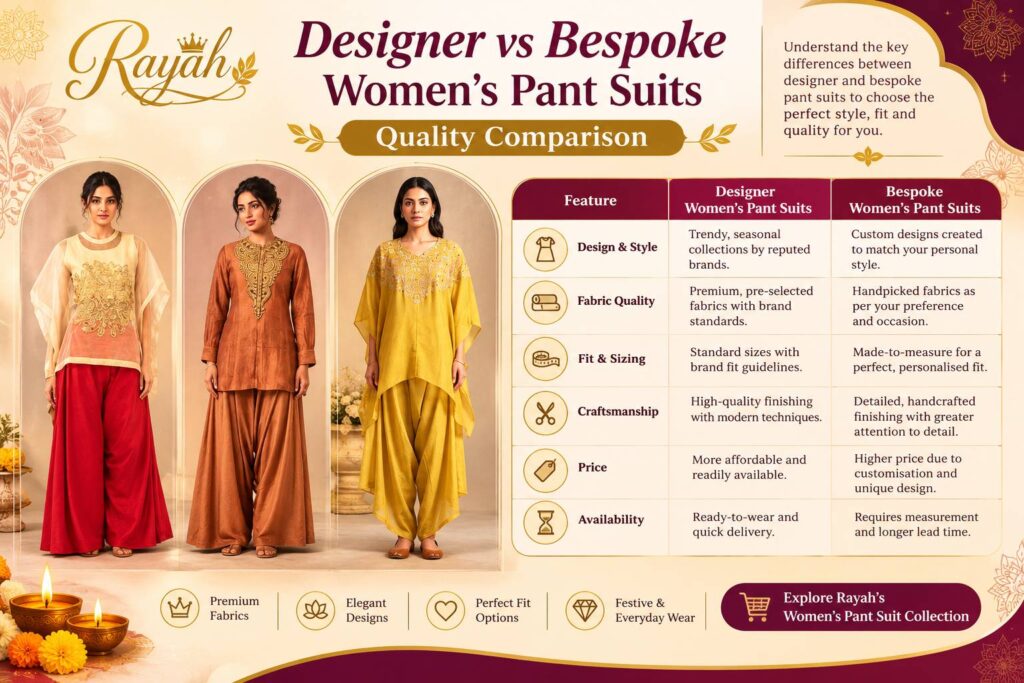
2. Quality Comparison: Designer vs Bespoke
| Quality factor | Designer pant suit | Bespoke pant suit |
|---|---|---|
| Fit | Based on standard sizing or available alterations | Developed around individual measurements |
| Fabric | Depends on the designer’s selection and specifications | Selected according to budget, preference and tailor’s options |
| Stitching | Quality varies by production method and workmanship | Can offer greater control over construction |
| Jacket structure | Depends on the design and internal construction | Can be tailored to the preferred shape and structure |
| Trouser fit | Determined by the available cut and sizing | Can be adjusted for waist, hips, rise and length |
| Personalisation | Usually limited to available options | Often offers more freedom over design details |
| Delivery time | Often quicker when available in stock | Usually requires additional production and fitting time |
| Price | Varies by design, fabric and brand | Varies by fabric, labour, fittings and customisation |
The important point: Quality depends on the actual garment, not simply the label attached to it. A bespoke suit made with poor fabric or inconsistent stitching may disappoint, just as a designer suit with excellent construction may perform very well.
3. Fabric Quality: What Should You Check?
Fabric affects the suit’s appearance, comfort, drape and ability to maintain its shape. For Indian weather, the choice deserves particular attention.
For a women’s pant suit intended for warm conditions, breathable fabrics and comfortable linings can make a difference. For a more structured occasion outfit, the fabric should hold its shape without feeling unnecessarily stiff.
Before buying, check these details:
- Surface and weave: Look for an even surface without obvious flaws, pulls or irregularities.
- Drape: The fabric should fall naturally rather than bunch awkwardly around the waist or knees.
- Weight: A heavier material may create structure, while a lighter one can feel easier to wear in warm weather.
- Lining: Check whether the lining feels comfortable and whether it restricts movement.
- Care instructions: Confirm whether the garment needs dry cleaning or can be maintained more easily.
Bespoke tailoring may allow you to select the fabric yourself, but that flexibility does not guarantee better material. A designer suit can use equally good or better fabric, depending on its specifications.
4. Fit and Stitching: Where the Difference Becomes Visible
A pant suit can look attractive on a hanger yet fit poorly when worn. This is especially noticeable around the shoulders, bust, waist, hips and trouser length.
With a standard-sized designer suit, you may need minor alterations to achieve a cleaner fit. Bespoke tailoring offers more scope to account for individual proportions, including differences between the waist and hip measurements or the way the shoulders sit.
Pay attention to these signs of good construction:
- Jacket shoulders sit naturally without prominent bumps or sagging.
- The front of the jacket closes without excessive pulling.
- Lapels lie flat rather than lifting away from the body.
- Trouser pockets remain reasonably flat when standing.
- Seams do not pull when sitting or walking.
- Trouser hems fall cleanly over the intended footwear.
For a bespoke garment, ask how many fittings are included and whether alterations are part of the agreed price. For a ready-to-wear designer piece, check the alteration policy before ordering.
5. Which Option Offers Better Value for Money?
The cost of a suit includes more than fabric and stitching. Design development, production, labour, finishing and the level of customisation can all affect the final price.
Designer clothing may offer better value when you need a finished outfit quickly, prefer an established design and find a size that suits you well.
Bespoke tailoring may justify the additional expense if standard sizes repeatedly fit poorly, you have specific design preferences or you plan to wear the suit frequently enough to value a personalised fit.
Consider the full cost before deciding. Alterations, extra fittings, delivery and maintenance can affect the total amount you spend.
A useful approach is to compare two suits at a similar budget and examine their fabric, construction, fit and expected use. This is more reliable than choosing based on price alone.
6. Designer Pant Suits for Indian Occasions
Women’s pant suits are no longer limited to conventional office dressing. With the right cut, colour and styling, they can work for festive gatherings, engagement celebrations, formal dinners and contemporary family events.
If you prefer a traditional influence, consider Indo-Western styling that balances a tailored silhouette with Indian design elements. The aim is to find a look that feels appropriate for the occasion without compromising comfort.
Rayah focuses on Indian and Indo-Western clothing with an emphasis on considered design and craftsmanship. When exploring designer pant suit sets for women online, review the actual product images, available sizes, listed materials and construction details rather than relying on styling photographs alone.
If you want to buy designer Indo Western outfits online, compare the silhouette and practical details before placing an order. Check the product description, size chart, return terms and estimated delivery date, particularly when shopping for an event.
7. How to Choose the Right Suit for Your Needs
Use your priorities to guide the decision.
Choose a designer suit if you want a finished design, a convenient shopping experience and a style that works within your available budget.
Consider bespoke tailoring if fit is your biggest concern, you want greater control over the design or you have struggled to find ready-made trousers and jackets that fit comfortably together.
Before committing to either option, ask yourself three questions:
- Does the jacket and trouser combination fit comfortably when I sit, stand and walk?
- Does the fabric suit the climate and the occasion?
- Can I verify the garment’s construction, care requirements and alteration options?
These simple checks help separate genuine quality from appearance alone.
Final Verdict
The choice between designer and bespoke women’s pant suits comes down to fit, craftsmanship, personalization and convenience. Bespoke offers greater control over individual measurements, while designer clothing provides a ready-developed style and can deliver equally impressive quality when made well.
For the best result, look beyond the price tag. Examine the fabric, inspect the finishing, check how the trousers and jacket fit together and choose a garment that suits your occasion.
Rayah’s approach to considered design and craftsmanship offers a useful starting point for shoppers exploring Indian and Indo-Western styles. Choose the suit that feels comfortable, looks well finished and fits the way you want to dress.
Is bespoke better than designer clothing?
Not always. Bespoke tailoring offers greater personalisation and can improve fit, while designer clothing can offer excellent fabric, construction and design. The actual workmanship determines quality.
Are bespoke pant suits worth the extra cost?
They can be worthwhile when standard sizes do not fit well or you need specific design adjustments. The value depends on the quality of the tailor's work, the fabric and how often you will wear the suit.
How can I identify a high-quality women's pant suit?
Check the fit, fabric surface, seam consistency, lining, pocket placement and how the jacket and trousers move with your body. Review care instructions and alteration options before buying.
Can a designer pant suit be altered?
Many designer suits can be altered, although the possibilities depend on the garment's construction, seam allowances and design. Ask a qualified tailor or the seller before making changes.
What should I look for in an Indo-Western pant suit?
Look for a comfortable fit, a balanced silhouette, suitable fabric and design details that complement the occasion. Also check sizing, movement, lining and the care requirements.
Which is better for a special occasion: designer or bespoke?
A designer suit is useful when you want an available style with less waiting. Bespoke can be suitable when you have a specific fit or design requirement and enough time for fittings.
Product categories
- Casual Wears (5)
- Indian Ethnic Wears (9)
- Indo Western Ethnic Wears (23)